
Welcome to Charleston
Monday morning, Helen Mage, head manager of Noodle’s Charleston warehouse, receives an email from London headquarters announcing that the newly appointed CEO, Clio Osborne, will visit and hold an All Hands meeting at each of Noodle’s global data centers.
Charleston is first on the list. Clio arrives Thursday.
Helen looks through the glass door of her office.
Two technicians are playing Go Fish. The receptionist is blabbing on the phone. A stack of tools has been sitting beside one of the server racks since last Tuesday. The IT guy is nowhere in sight because he has taken another three-hour lunch break.
Distraught, Helen throws open the door.
“Meeting in one hour!”
For the next three days, Charleston undergoes a transformation.
Thursday morning arrives, and everyone at the site is working frantically to finish the makeover before Clio’s arrival. Tools normally left lying around are thrown into the janitorial closet. Loose boxes disappear. Forgotten paperwork gets filed. Someone wipes fingerprints off doors nobody knew could shine.
The IT guy has been reassigned to sweep-and-mop duty.
Helen performs last-minute microphone checks in the cafeteria, which has been converted into a conference room for the All Hands presentation.
Then Clio’s Uber pulls up.
The office manager greets the new CEO at the entrance, hands him a chocolate-chip muffin—his favorite breakfast sweet, according to someone who did their research—and begins the tour.
The front-office staff type furiously at their keyboards, suddenly resembling the employees described in their job descriptions.
In the warehouse, technicians kneel beside server units with wrenches in hand, cranking away at nuts that do not exist.
Everything works.
Everyone smiles.
Nobody mentions the IT guy’s lunch breaks.
Soon, more than one hundred employees gather in the cafeteria to hear their new CEO explain his plan for Noodle’s next five years.
Clio finishes his speech.
The room rises into a standing ovation.
He looks out over a hundred people he has never met applauding his leadership.
Clio smiles, thanks the Charleston team for their hospitality, gets back into his Uber, and disappears down the road.
And scene.
The room exhales.
Someone loosens his tie. The technicians put their wrenches down. The hidden tools slowly make their way back out of the janitorial closet.
The IT guy speeds off for his three-hour lunch break.
02 / The PerformanceThe CEO as Truman
The real-world version of The Truman Show begins whenever a person’s perception becomes consequential enough that everyone else starts editing reality before it reaches them.
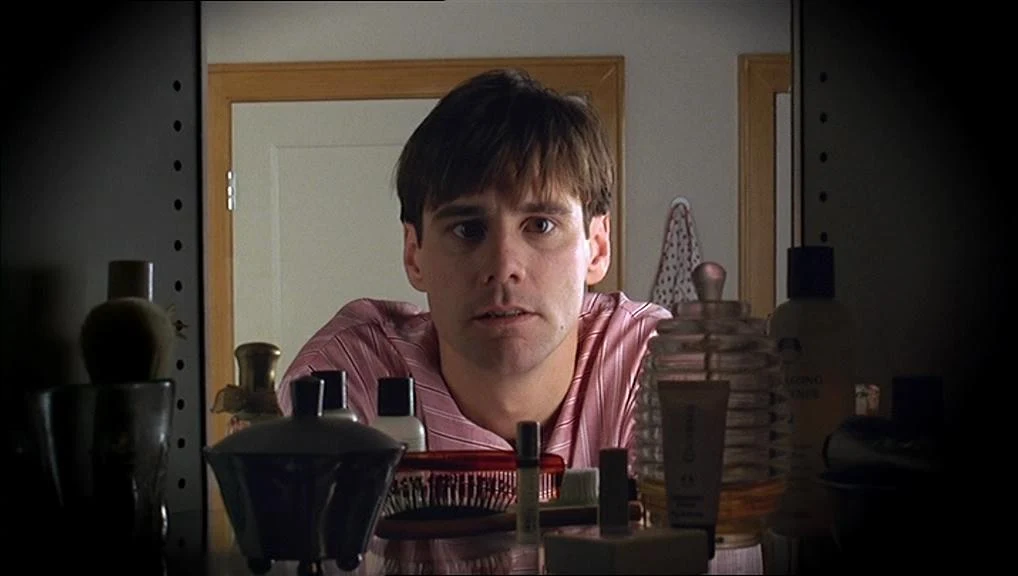
The CEO does not merely enter the warehouse and observe it. His arrival changes the warehouse. The floors are cleaned, neglected procedures are suddenly followed, managers become unusually attentive, employees suppress complaints, and everyone performs the version of the organization they believe he wants to see.
He therefore sees something real—but not the reality he thinks he is seeing.
He sees the warehouse’s capacity to stage competence under observation, not its ordinary condition.
03 / The ParadoxPower and the Problem of Perception
Truman’s predicament is not only that people are lying to him. It is that the entire social environment has been organized around controlling what he can know. Every person he encounters has an incentive to maintain the same interpretation of reality.
Something similar happens to powerful people:
- Subordinates conceal bad news.
- Visitors are shown the best facilities.
- Meetings are rehearsed before the executive arrives.
- Difficult employees are kept away.
- Dashboards emphasize favorable metrics.
- Questions are pre-screened.
- People laugh more readily at the leader’s jokes.
- Even spontaneous interactions are quietly engineered.
The more important a person becomes, the more other people have reason to manage that person’s experience. Experimental research on power and perspective-taking suggests that power may also narrow the observer, not only the view.
That is the paradox.
A low-level employee may know exactly how dysfunctional the warehouse is because he encounters its failures every day. The CEO may have enormous authority over the warehouse while knowing it only through presentations, tours, metrics, and carefully selected anecdotes.
The person with the most power can become the person living inside the most elaborate set.
04 / The ProductionMore Than Hypocrisy
The workers are not necessarily malicious or dishonest. Their performance is often a rational response to asymmetrical power.
Suppose the CEO asks:
“How are things going here?”
An employee cannot know whether this is a genuine invitation to speak freely or an unspoken test of loyalty. Telling the truth might improve the company—or embarrass the employee’s manager, threaten someone’s job, or mark the employee as negative and difficult.
So the employee says:
“Things are going really well. We’ve had a few challenges, but the team is excited.”
That sentence may be technically true while concealing nearly everything important.
The performance emerges without anyone explicitly ordering it. Each participant independently calculates what is safe to reveal. The resulting illusion is distributed. No single person needs to be the director because everyone understands the production.
That is one of the most disturbing aspects of The Truman Show: the artificial world is not sustained merely by cameras or a producer. It is sustained by thousands of ordinary people treating the maintenance of the illusion as part of their job.
05 / The StageThe Frontstage Consumes the Backstage
In The Presentation of Self in Everyday Life, the sociologist Erving Goffman distinguished between frontstage behavior—the self presented before an audience—and backstage behavior, where people relax the performance.
A CEO visit temporarily converts the entire warehouse into a frontstage environment.
But in highly managed organizations, the transformation can become permanent. Employees learn that they are always potentially being observed through productivity software, customer ratings, security cameras, performance metrics, Slack activity, or managerial reporting. The ordinary workplace gradually becomes a stage on which workers must continually demonstrate that they are working.
At that point, the company can begin optimizing for the appearance of work rather than the substance of work:
- Activity replaces accomplishment.
- Responsiveness replaces judgment.
- Clean dashboards replace honest diagnosis.
- Visible urgency replaces thoughtful execution.
- Confidence replaces knowledge.
- Rituals of alignment replace actual agreement.
The organization does not merely hide its failures from leadership. It rearranges itself around producing reassuring evidence for leadership.
06 / The Feedback LoopTrapped Inside One’s Own Preferences
The illusion is often constructed from the leader’s own reactions.
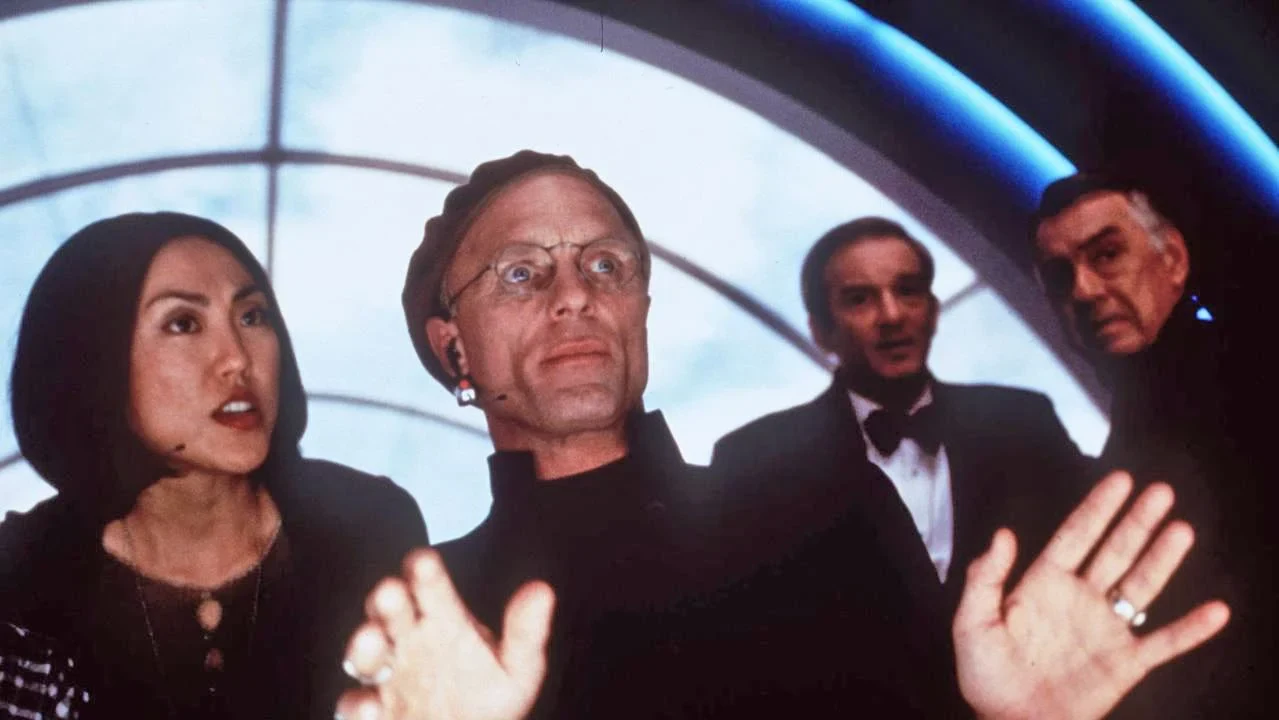
Whenever a leader punishes someone for delivering bad news, visibly prefers flattering presentations, rewards superficial enthusiasm, or humiliates people who disagree, the surrounding environment learns what kind of reality to manufacture.
Eventually, no further instruction is necessary.
The leader may then sincerely complain:
“Why didn’t anyone tell me?”
But people did tell him—through hesitation, euphemism, turnover, declining quality, strange metric patterns, and carefully worded objections. He had trained the organization not to speak in unmistakable language.
This makes the Truman condition partly self-created. A powerful person’s world is shaped not only by what others want from him, but by what they have learned he is emotionally capable of seeing.
The myth makes itself true
The imagined leader creates the real one.
Operating myth / “He hates surprises.”Feedback loop: Leader reacts strongly leads to A myth spreads leads to Bad news is softened leads to Problems arrive as crises leads to Leader reacts strongly.
One Warehouse, Multiple Realities
The warehouse may contain at least four versions of itself:
- The lived warehouse: what workers experience every day.
- The managerial warehouse: what local supervisors believe they can admit.
- The reported warehouse: what appears in metrics, presentations, and status reports.
- The ceremonial warehouse: what the CEO sees during the visit.
There is one company, but no one sees all of it.
Lived: Detailed floor-level view: broken machinery, informal workarounds and actual relationships. Managerial: Some details are obscured; annotations explain what can safely move upward. Reported: The warehouse is reduced to metrics, charts and status indicators. Ceremonial: An immaculate executive tour route hides everything outside the frame.
All four are connected, but they are not identical.
This is why senior leaders are sometimes bewildered when a scandal, collapse, or labor revolt occurs. They were not necessarily ignoring the reality presented to them. They may have been responding conscientiously to a different institutional reality, one assembled through layers of filtration.
Everyone below them knew fragments of the truth. Almost no one had both the incentive and the authority to assemble those fragments into a picture the leader could not dismiss.
08 / The ThemeThe Theme of the Truman Show
Truman’s central struggle is a struggle for an unfiltered view of reality: the right to encounter a world that has not been prearranged to produce a particular response in him.
That is what powerful people, celebrities, wealthy clients, politicians, and even charismatic family patriarchs can lose. Their choices matter so much to others that ordinary interaction becomes difficult. People stop relating to them and begin relating to the consequences attached to them.
They may no longer know:
- whether affection is affection or access-seeking;
- whether agreement is agreement or fear;
- whether praise reflects excellence or hierarchy;
- whether an apparent success would survive without ceremonial preparation;
- whether anyone around them is behaving naturally.
The tragedy is that this can resemble privilege from the outside. Everyone is attentive. Everything is clean. No one openly contradicts them. Their jokes land. Their plans receive enthusiasm.
Yet they may be profoundly isolated from reality.
The practical question then becomes not merely, “How should leaders obtain honest feedback?” It is more severe:
The answer cannot simply be “tell people to be honest.” Even that request can become another scene in the play. The leader has to design conditions in which truth is safer, more rewarding, and structurally harder to suppress than performance.