Capture gesture
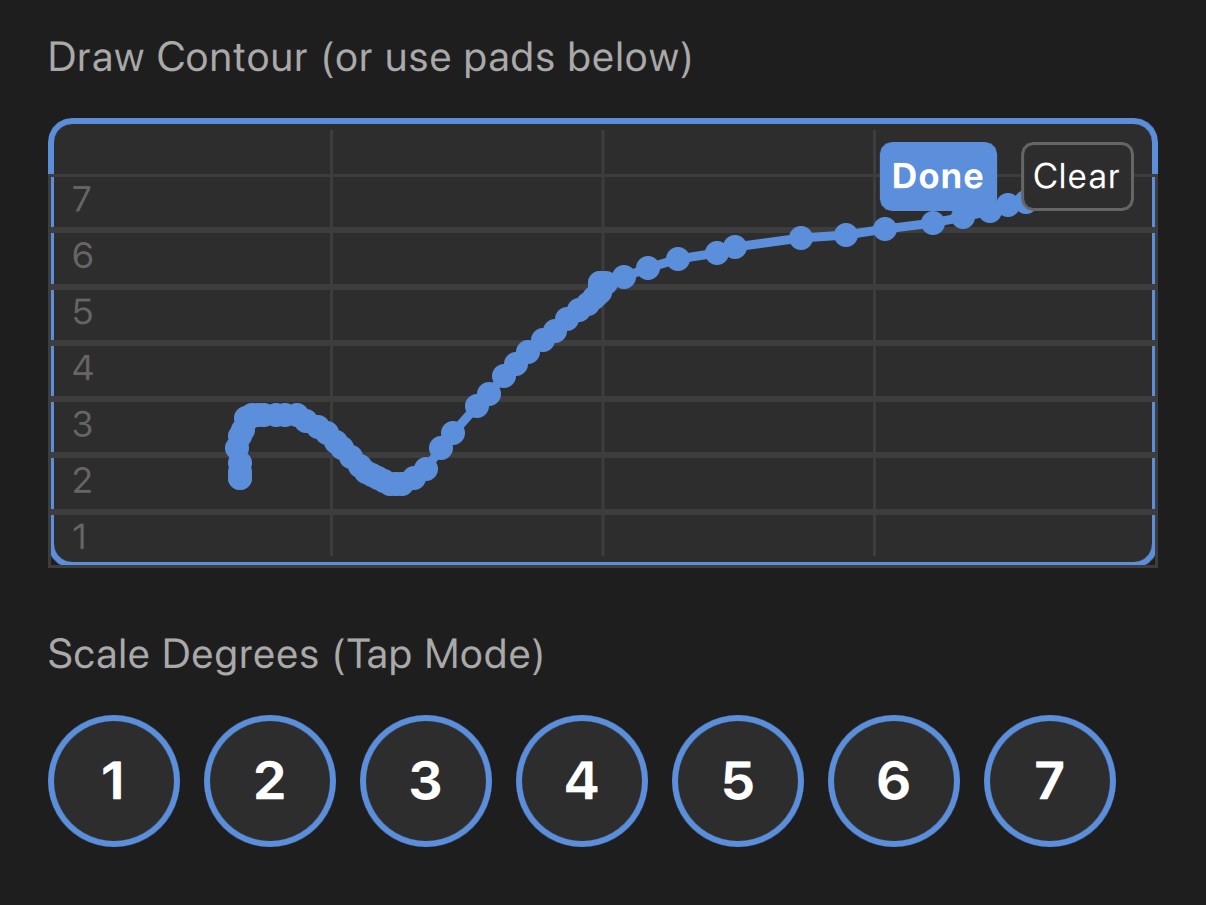
Translate melodic contour and movement directly, before symbols or discrete note entry become necessary.
A mobile composition system designed to move musical ideas from intuition to notation without interrupting creative flow.
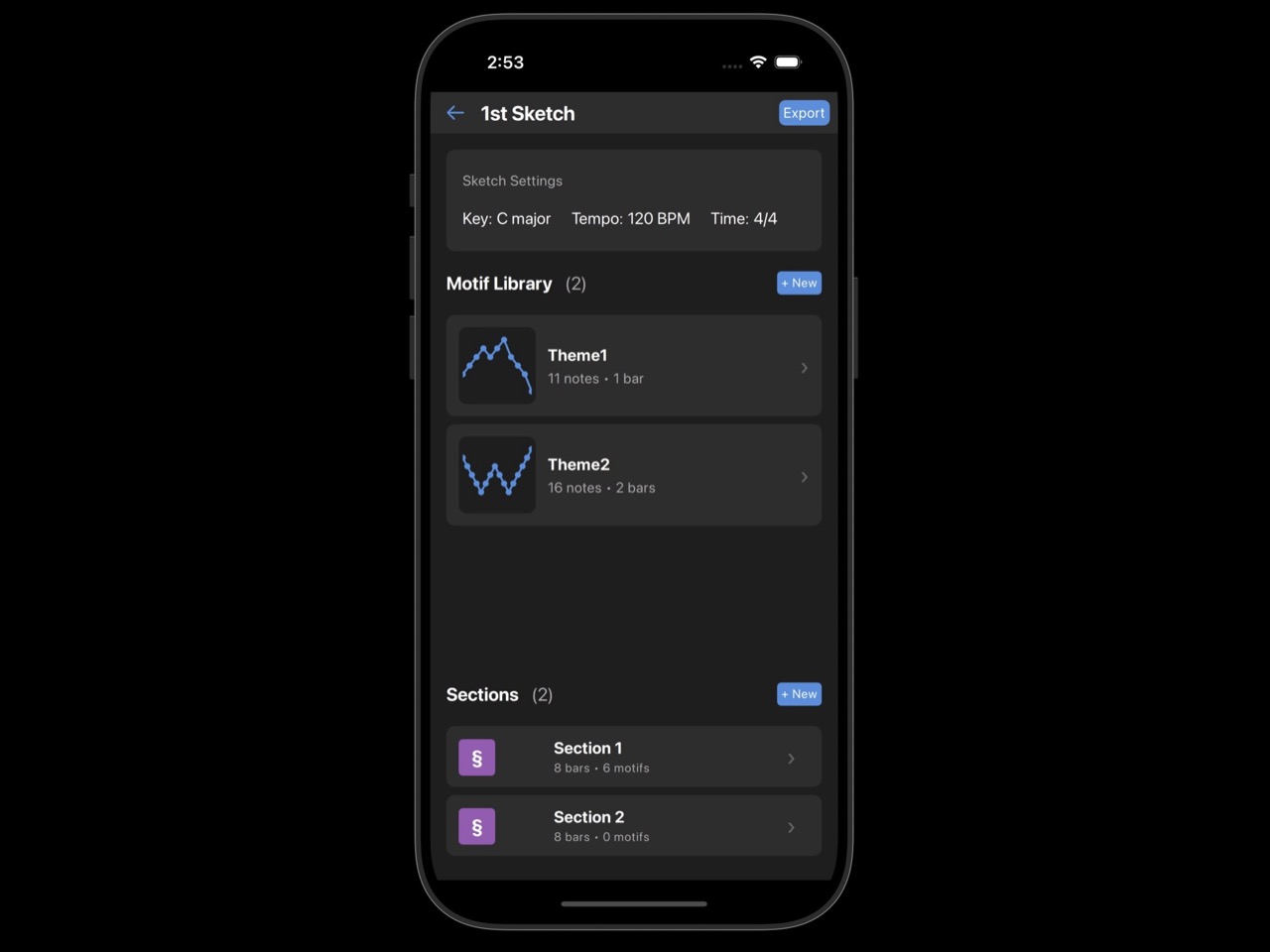
Traditional notation software assumes that musical thought begins with notation. Most ideas begin somewhere less formal: gesture, contour, rhythm, and motion.
MuseSketch began with a different premise. The interface should preserve the shape of an idea before asking the musician to formalize it.
Translate melodic contour and movement directly, before symbols or discrete note entry become necessary.
Introduce formal structure only when it adds value instead of forcing it at the moment of inspiration.
Make composition feel responsive and embodied rather than clerical or menu-driven.
The system introduced precision in stages. Each layer respected the information and ambiguity preserved by the one before it.
Continuous movement captured melodic contour without requiring discrete note entry.
A translation layer found musical structure without treating the original gesture as an error.
Formal notation emerged as an output when it became useful, not as the primary interface.
Movement offered a more natural expression of contour than selecting individual notes on a small screen.
Quantization became a collaborative translation of intent rather than a judgment about accuracy.
Immediate audio feedback carried more meaning than additional visual confirmation or interface chrome.
The system could arrive at formal structure without forcing the creative process to begin there.
MuseSketch reframed composition as a fluid process. Ideas could be captured naturally, translated deliberately, and formalized without turning structure into an interruption.